by Stanislas Jourdan | Dec 1, 2014 | Opinion
Yoland Bresson (1942-2014), one of the prominent advocate for basic income in France passed away during the summer.
A tribute by Jacques Berthillier originally published in French. Translated and adapted by Stanislas Jourdan.
In 1971, Yoland Bresson worked as an economist for the Concorde aircraft project, and observes a surprising fact: those who have more control over time and personal schedule are those with more financial resources (and those who are more likely to book flights on Concorde airlines). Moreover, people’s resources increase over time because freedom and time allow to take advantage from commercial discounts, and get access to social conditions which allow to escape from constrained social time.
Yoland started to dedicated himself into studying those notions until he found the theory linking spare time with income, which he published in 1981, and developped in the book ‘Post-Salariat’ in 1984. A conclusion emerged from this theory: the value of time is the value of the minimum income, the poverty line from which individuals become economically integrated. Therefore, we should distribute to people the monetary equivalent of the unit of time.
In 1986, Yoland Bresson was invited by Philippe van Parijs to participate to the very first meeting in Louvain-la-Neuve (Belgium) where BIEN was founded.
Later on, he was contacted by Henri Guitton, reknown economist and very enthusiast reader of Bresson’s books. They decided together to found a working group around those concepts. After a series of meetings at the Polytechnic University, the “association for an existence income” (AIRE) was created. They insisted on the notion of ‘income’ as opposed to ‘allocation’ [allowance] because an income is linked with the contribution to the creation of wealth, while a social allwoance is refers to the notion of assistance. Indeed, every single exchange of time contributed to the creation of wealth, as Bresson proclaimed.
First, Henri Guitton was president of the AIRE, then Yoland Bresson replaced him after Guitton died. The association was striving for the instauration of an ‘existence income’, it explored the idea in order for all citizens and politicians to embrace it.
Since then, the AIRE kept spreading the idea. It notably organised a BIEN Congress at Paris Saint-Maur in 1992, a colloque at Cedias on june 12th 1996, and two other ones at the French National Assembly: one on November 26th, 1998, with more than 300 participants. Finally; and the second one on june 23rd 2004 with the sponsorship from Christine Boutin (Christian-Democrats leader).
In 2012, when the European Citizens’ Initiative for Unconditional Basic Income started to be organised, Bresson immediatly supported the efforts deployed by a new generation of activists. He partners his association with the launch of a new website revenudebase.info which resulted in the creation of the French Movement for a Basic Income, a new association which broadly federates all those who push for the idea of a basic income. Yoland Bresson had the wisdom and open-mindness necessary to trust the young new blood who made the movement grow.
Yoland Bresson also played an international role in the promotion of basic income, notably through his interventions in the french-speaking african countries, and until recently in Bulgaria. Shortly before he died on august 22nd 2014, he was invited for a conference at the Polish Parliament.
His contribution as an economist also include his last proposal: the creation of a eurofranc, a new national currency complementary with the euro currency. His idea was to unleash the possibility to finance a basic income with money creation, without transgressing the Lisbon Treaty – which would result in leaving the eurozone. Such scheme was set to be temporary, allowing a smooth transition for the introducion of a basic income.
If this very innovative (and even revolutionary) proposal was adopted, the introduction of a basic income would be facilitated, and the economic activity would be simultaneously stiumulated.
Following Yoland Bresson’s decease, we have received a very large number of letters expressing sympathy, esteem and gratitude to Yoland and his family. It would not be possible to publish all of them, but there is one we would like to communicate. The one from BIEN’s founder Philippe van Parijs:
Yoland was present at the founding Assembly of BIEN in 1986. Until now he remained a loyal camarade of thoughts and struggle. Like others before and after him, he passed away without witnessing the achievement of a proposal he kept believing. Nonetheless, the day when his country as elsewhere eventually will implement the basic income, we will owe him and others with such personalities »
by Stanislas Jourdan | Nov 25, 2014 | Opinion
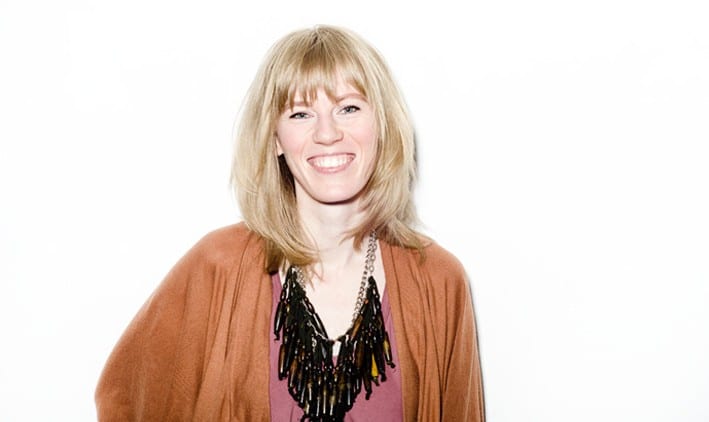
Last month, the Icelandic Pirate Party made a significant move in order to create discussion in Iceland about basic income by submitting a resolution to the national parliament. While the proposed resolution remains to be discussed, we have contacted its author Halldóra Mogensen, Deputy MP of the Pirate Party of Iceland in order to get to know more about her initiative.
Can you tell us more about the Icelandic context in regards to basic income?
There is very little awareness of the ideas behind the unconditional basic income (UBI) in Iceland. There are a couple of groups that I know of that have put UBI on their agenda. One is Alda, Association for Sustainability and Democracy, the other is the Icelandic Humanist Party which ran in the 2013 national elections.
The best literature I have come across so far on UBI in Icelandic is a bachelors essay (pdf) written in 2013 by Bragi Þór Antoníusson. The essay looks at the UBI from an Icelandic point of view and attempts to calculate costs and benefits of introducing such a system in Iceland. The calculations however were incomplete due to the lack of transparency in government accounts.
I recently sat in parliament for two weeks as a deputy for Pirate Party MP Helgi Hrafn Gunnarsson and used the opportunity to, amongst other things, ask the health minister and the housing and welfare minister for a written account of the total operational costs of the entire welfare system. The answers will help give us a better idea of the feasibility of introducing a UBI in Iceland.
Why is the Icelandic Pirate Party interested in the idea of basic income – and how did you come up with this resolution?
There are other Icelandic Pirates who are very interested in UBI ideas but it has never really been discussed on any proper channels within the party. I am a proponent of taking an holistic approach in all issues. As a society I feel we spend too much time and effort treating symptoms when we should be looking at the root disease causing these symptoms. I feel UBI has the possibility of addressing the root cause of the inequality and dysfunctional democracy we face as a society.
When I received the news of my short entrance into parliament my original thought was to write a speech about poverty and inequality and to touch upon the subject of UBI as a possible solution when Aðalheiður Ámundadóttir, human rights lawyer and employee of the Icelandic Pirate Party, suggested that I write a proposal instructing the housing and welfare minister along with the finance minister to put together a team to research the UBI idea. I delved into the project and rallied together individuals who have been writing about UBI in Iceland and sought out their help in writing the proposal (here on the parliament’s website
).
What sort of reactions have you received so far?
Mostly curiosity, especially from other MP’s. Apart from Pirates MP’s who were very enthusiastic about the idea, other Icelandic MPs were very hesitant to sponsor the proposal but found the idea to be interesting and positive. No one I spoke with had heard of UBI before, and that most likely explains their hesitation. Hopefully the proposal will spark an interest in gathering more information on the subject.
What are the chance for the resolution to pass?
I have to admit that I am not incredibly hopeful that the proposal will pass, it might never even go to the vote. The first step in the process is for me to speak on behalf of the proposal in parliament after which time it will go to a committee to be discussed. The committee will then decide whether the proposal gets put through to a parliamentary discussion. After two rounds of spoken discussions there could be a vote.
This being said the main goal of writing this proposal was to start the conversation, not only in parliament but in the community. I wanted people to get acquainted with the ideas behind the UBI and start the conversation in Iceland, and to me this was the first step on that journey.
Can you tell us more on how you got into the idea of basic income?
I really cant remember how I got into the idea of basic income. I read a lot and spend time around strange, radical minded people I guess! I have enjoyed following the discussion going on in Europe and seeing the idea gaining support. I was very excited to see UBI being discussed in The Economist, going into the main stream is a big step. I am also very hopeful for the Swiss elections on a basic income. All of this international coverage seeps into the Icelandic conversation but there is a need for more literature in Icelandic. I hope to see this happen in the near future as the idea gains support.
Halldóra Mogensen, thank you!

by BIEN | Nov 11, 2014 | Opinion
FORWARD: The following article is nonfiction story by Diane Pagen, a Basic Income activist and social worker from the New York area. It chronicles an attempt to give a Christmas basket to families of students at a school in an underprivileged neighborhood in the Bronx. The article doesn’t mention basic income directly; yet, the story makes the need for some form of basic income guarantee extremely clear. The attempt to do good is filled with all that is wrong with both contemporary charity and the contemporary welfare system. People want to help, but they end up wasting most of what they give, humiliating the people they want to help, giving people things they don’t need, and inspiring feelings of resentment in those left out. The author even discusses how much more effective they could have been buy simply giving cash to every family at the school without attempting to judge them or imposing the desires of the givers on the receivers.
-Karl Widerquist, editor BI News, Hot Springs, Virginia, December 30, 2013
It’s Christmastime. Children’s pictures of Santa Claus and stockings made from red construction paper, glue and cotton balls hang on my office door. My small, windowless office is in the back of our school. I turn the key and sit right down, still in my coat. I am the social worker. The sweet murmurings of children’s voices are reassuring and familiar.
There are many little schools like this one, peppering the neighborhoods of the Bronx, Brooklyn and Queens, where so many of the parents are low-income and so many of the children thought to be “at risk.” “At risk” is really an abbreviation for a situation so unpleasant that no one wants to say it. “At risk” makes it that we don’t have to. It really means poor. It really means that the children are at risk for all of the problems that come from being poor. Imagine having to say, “children at risk for malnutrition, learning problems, overcrowding, behavioral problems, dying from exposure in an apartment with no heat, homelessness, fires started by lit candles and defective space heaters….” In so far as “at risk” implies an outcome that has not happened yet, it is a deceptive term, changing the verb tense so that the child’s present and actual state of malnourishment, homelessness, and despair are made to sound like a future possibility that enough middle class interventions, and charity, can prevent. Nothing brings up feelings of wanting to intervene with “at risk” children more than Christmas, a time where music, money, guilt, snow, religion and good intentions form a perfect storm.
My colleague, Roberta, the school psychologist, comes and leans against my doorway. Today, she says, we are going to be asked to suspend our therapy sessions with the kids so as to help the school to put together Christmas baskets for some of their families. There will be a meeting in a few minutes, once the kids are in class, to talk about how it will work.
We’re sitting in the basement, where we have all our meetings. Five of my colleagues are there, including the school psychologist, the occupational therapist, the school’s coordinator, our school nurse. The principal presides. “As you know,” she says, “many of our families are at risk. Many of our families do not have enough money to buy what they need for the Christmas holiday. So I have decided that we can do something about this by putting together Christmas baskets for the neediest of them. Each of the six teachers is going to give us the name of the neediest family in her class. The baskets will be filled with a ham, some canned food, a bag of rice, cookies, and something special like face mounted acrylic prints of their child’s school photo, which many families could not afford to buy when school photos were being sold at the start of the year. We will wrap them up and decorate them with a few ornaments, and give them out next week at the school Christmas party.” It had all been decided.
“How are we going to get the food for the baskets?” Maria, the school coordinator, wanted to know, since it was likely she was expected to coordinate it.
“At ten today, Frank will drive all of you over to the supermarket in his SUV.” Frank was the speech therapist. “You’ll work in pairs and buy all of the items. Then you’ll stop over at the Kingsbridge Target and find some big baskets. We’ll wrap everything up in the afternoon. We’ll keep the hams in the freezer until the day of the party. No one will do therapy sessions today to give us a chance to get this done.”
“How will we know that the family picked is really one that needs help the most?” I asked.
“Like I said, the teachers will decide,” the principal said.
My colleague, the school psychologist, stood up first when the meeting was over.
“Carajo,” she said.
We piled into Frank’s SUV at 1 o’clock. The plan got complicated when the principal realized that the school nurse usually helped the teachers serve lunch. Frank and the naturally nervous occupational therapist Marina split off in search of hams. In the enormous supermarket, I felt disoriented. It was not a neighborhood supermarket, small and navigable, but a “food warehouse” just off the Major Deegan Expressway, in the space between two neighborhoods, belonging really to neither one. The aisles were wide with limited signage, and the ceilings high enough to hold a commercial jet. Merengue music blared from speakers and bounced off the concrete walls. It wasn’t heated. It took me twenty minutes to locate the canned vegetables, and we got canned yams and canned spinach. I settled on a low-sodium variety-100 mg instead of 250. In a pathetic attempt at cultural sensitivity, I added six packets of dried beans. Unable to decide on which, I picked pink ones. I tracked down my friend and assigned partner, Roberta, growing irritable in another aisle, trying to use the calming techniques she taught the children on herself. I knew she was thinking about the work on her desk, back at the school. I was about to say something when she interrupted me by finding the canned cranberry sauce. She reached out and threw six cans of it into the shopping cart, and they clattered helplessly against the metal.
“These families are mostly Dominican and Puerto Rican,” she said. Roberta was Puerto Rican herself. “We don’t eat crap out of cans. We would never eat this sh** in Puerto Rico.” I had suggested the same, in different words, to the school coordinator, privately after the morning meeting. It was true, she had said, but buying things like fresh vegetables and a bag of fresh cranberries was not practical for us, because we wouldn’t be able to store it before next week’s Christmas party. It was complicated enough that we were going to have to put the hams in at the last minute. The “for us” lingered in my head.
All of us, from the speech therapist turned chauffeur to the psychologist turned cynical shopper managed to find each other at an exit flanked by beer crates piled high on either side, after paying with the cash we’d been given. $600 total. In all, we were in the warehouse one hour and forty minutes. Way past lunchtime, none of us had eaten. We still had to stop at Target to get the baskets. Everyone was tired and worried about the time. The short winter day was evaporating over the Harlem River. So we decided to try the local stores. The largest baskets were way more expensive than the money allotted for. They were pretty, but about $20 each. Then Frank came up with a solution.
We went to the 99 cents store on Fordham Road. We located and bought six plastic “giant” laundry baskets. They weren’t pretty, and unfortunately there were no red or green ones to make them look more Christmas-y. There wasn’t white either, which was at least neutral. We settled on yellow. It was the only color they had.
When we got back to the school, the kids had been dismissed already. The teachers and the principal were in one of the front classrooms, talking about which six families out of 53 were the poorest. Someone was suggesting we call each one and ask them their income and go by that. “It’s the only way to know for sure.” Someone else said if the parent knew what it was for, they might lie so they could get a basket of free food. Someone else said we should choose the families with the most kids, to which one teacher objected that that was rewarding having too many kids while poor. Someone said we should only pick single mother families, to assure that we got the poorest in the lot. Given the statistical reality that the poorest families are single mother families, this idea made some sense. Eventually, it was acknowledged that no matter who was chosen, every family in the school was so poor, it didn’t really matter who got picked. A teacher said that we should definitely pick the family of the little girl whose parents were known to have HIV. They were not just poor, the teacher reasoned, but very sick, too. Some nodded. The principal objected. “They have plenty of money. Did you see the beautiful winter coat she’s been wearing to school?”
The talk went on like this for a while. Finally and somehow, the teachers settled on six families, with only weak objections that petered out by the next day. Who was not a good mother, who was known to clean houses on the side even though she got “welfare,” who was trying to get her kid on disability when he wasn’t disabled, who didn’t dress the kids warmly enough. I ventured to say that that was a point in favor of the mother with HIV, who had somehow made the effort to get her daughter a beautiful and warm coat. No one got it. I was glad that we could move on to packing the baskets. Roberta was angry, I could tell, because whenever she had lost hope in those around her, her intelligent sarcasm would disappear and a resigned silence would take its place.
As it turned out, it didn’t take one day for the Christmas Basket project as the principal had planned. It was nearly 5 o’ clock when we decided we’d have to take it back up tomorrow. So the next day, when we were all back at school, we were again instructed to suspend our therapy sessions for the day.
We lined up the plastic yellow baskets in the back offices on pressed wood tables, along with the canned goods, the boxes of cookies, powdered potatoes, my bags of pink beans and so on. I even saw some baby toys lined up on the tables, with some truly unique ones like a baby sensory crinkle foil, rattlers, teethers, and more. The nurse brought in some tree tinsel she had left over from trimming her tree, so we could decorate the “baskets” a little. The frozen hams would go on top the day we gave the baskets away.
The plan now was to announce the baskets and give them away on the last day of class before Christmas. The principal would do this at the end of the year holiday party for the students and parents. Sometime after the meal, the principal would make her speech and in the process, announce that several families had been chosen to receive special help for the holiday. Then the families would take their baskets home.
I went to see the principal later on in the day. “The baskets are really heavy already, and we don’t even have the hams in them yet,” I said. I told her I was worried that parents, not knowing they’d have to bring home anything this heavy and large, wouldn’t have any way to get the baskets home. We should tell them, even though it would no longer be a surprise, I said. The principal agreed that this might be a problem, but that most people lived a few blocks away. I reminded her that while that was true, they had children with them, and it might be impossible to manage with both. Furthermore, most families lived in walk-ups, and would need help to get the baskets up the stairs. Later, she announced that Frank would remain on call in case one or two families needed a ride. A teacher suggested that if we gave a ride to one family, then every family would expect one. “Well, I think we are doing way too much for them,” the teacher said. “Isn’t it enough they are getting the gift basket? They should work out their own way home.”
There was a small glitch when we were almost done wrapping the baskets: not the best quality plastic was used in their overseas manufacture, and they began to break in spots. We convened to see how to solve this problem. For one, returning the baskets was impossible, for despite their poor quality, we had forced very hard objects into them, rather than clothing, which was not the baskets’ intended use. We’d have a rough time proving our case to the 99 cents store owner. Second, unpacking the baskets would be too time consuming: each of us was now on our third day of working on this good deed, and the kids had missed three days of therapy already. If they missed a fourth day, we’d never catch up.
So we decided to reinforce each basket by wrapping it in plastic wrap. That way, the mothers (and some fathers) would be able to see their bounty, and if the basket broke more, the plastic wrap would hold it together long enough to get it home. The occupational therapist ran out of the building with her own money to get some at the supermarket. I was being reminded that every solution creates a new problem, and every new problem has, somewhere, a solution.
Roberta and I wrapped up our last one-each team of two people wrapped two baskets-on the carpeted floor of her office. Her objections to the project’s many impositions and cultural incorrectness had finally given way to acceptance. Between handing me pieces of tape, and cursing when the plastic wrap stuck to itself, she joked how all the canned goods were going to end up in the back of kitchen cabinets, to remain there only if things got really bad in the New Year. We discussed the relative weirdness of giving a box of powered potatoes to a people who only tolerate real potatoes when they can’t find another root vegetable: la malanga, la ňame (pronounced “nyame”), and la yuca being way more flavorful than the unimaginative potato.
For the most part, I had given up on talking to my colleagues or my boss about the ethical and practical problems with the basket project. It consumed human resources meant to be spent on existing work and therapy; it did not consider the real needs or preferences of the families. It created unexpected work for them-having to get the things home, having to figure out what to do with it all once it was unpacked; finally, the project cost a lot of money in man hours of six professionals who are paid about $35 an hour, times three seven hour days, equals $4,410 in labor, plus the $100 spent on the contents of each, the cost of the six baskets ($1.99 cents each) and the gas for Frank’s vehicle. Roberta and I talked about what an incredible help it would have been to instead take that $5,000 and divide it by 53, and give the cash out evenly among all the families, whereupon they could have chosen how to spend the nearly $100 bucks themselves, and bought real potatoes and real cranberries if they’d wanted to. While decorating the baskets with tinsel, I noticed the writing on the box that said, “not safe for children who may be put mouth.” Translation: Toxic to children below three years old. I remembered that one of our cats had gotten sick from chewing tinsel when I was a kid. We all pulled off the tinsel and threw it away.
The occupational therapist ducked out of the festivities right before the principal stood up to lead a prayer and get to the business of the Christmas Baskets. The day of the party had arrived, and the occupational therapist was charged with putting a frozen ham with each basket before the baskets were brought out. Unfortunately, since the baskets were already heavy and wrapped, each ham had to be handed over with a complicated explanation of why it wasn’t included more conveniently in the basket. In any case, the parents were politely asked to pay attention, so that we could announce the surprise. They took their seats with their children beside them, a collection of red, white and green dresses and small dress shirts proliferating on gray metal chairs. The parents balanced paper plates, filled up high with their pot luck Spanish dinner, on their laps.
The principal lowered the music and took the floor, announced our idea to give some extra help to a few families. As I expected, any explanation turned out to be too awkward, raising more questions than it answered, and as she stumbled over her words she realized it too. To say the chosen families needed the help more than the others was to advertise that they were particularly destitute, since everyone in room was poor, including by the way the teachers, who made about $12 an hour. To say the chosen families were being rewarded would be taken to mean we thought they were better parents than the others. Either way, the principal was tongue tied, and I felt her pain, though I’d warned her this would happen.
She abandoned the explanation. As each family was called up to take their basket (and their frozen ham) to weak applause, true to human nature, each reacted in a different way. Some smiled and looked genuinely happy. Some seemed embarrassed, and tried to sit back down right away, but couldn’t, because they had to drag the heavy basket along the floor back to their chair. Flashes went off. Polite but quizzical looks formed on the faces of those parents who it turned out were not getting a basket. One woman who heard her name asked immediately, “Dios mio, how am I going to get this home?” The principal reassured her that Frank would help. Frank quickly put on a smile and looked anxiously at the clock. The weatherman had said snow, and Frank lived in Westchester.
I looked for Roberta. She’d retreated to the back to play with a couple of her regular children, the only sane people in the room. The pictures would later appear in the newsletter of the social services agency to which our school belonged. The party began to break up as some of the teachers and parents left, blowing kisses, ‘Merrychristmases’ and ‘Dioslebendigas’ into the air. In the background, I noticed some angry voices and looked up. Those who had not gotten a basket had been handed Tupperware and invited to help themselves to the various hot, delicious homemade-by-parents dishes they’d just been served at the party, so that nothing would go to waste. To the amazement of all except maybe Roberta, this caused outrage: the parents who had to lug home the Christmas Baskets were upset that they couldn’t have any of the homemade, non-canned, Spanish delicacies. Rice and beans, dulce de leche, roast pig falling from the bone, and so on. People have killed for less. Even if it had been allowed, the “basket families” could not possibly carry anything else home because of the mammoth baskets they’d been saddled with. An argument ensued between two parents who got a basket and one who didn’t. Tragically, a cup of homemade coquito ended up on the floor when one of them wouldn’t let go of it. Strident objections were heard. Children absorbed the tension and began to cry. I could only sit and watch, wolfing down my plate of roast pig, rice and beans, lest it be wrested from me. Eventually, an uneasy decorum prevailed, but the true preferences of the people had shattered the good will the whole project was supposed to create.
We went to get our things from our offices, since the school would be closed for the Christmas break. The teachers were mostly gone. I later found Roberta downstairs drinking a soda and cleaning up. I got out some paper towels. We didn’t talk about the Christmas Baskets.
“Well that was nice!” the school nurse said.
I had gone back upstairs to get my coat, and bag. On the way past her office she had called out to me. I stopped in her doorway. I thought of what to say.
“I think that it was a lot of work for not much return. We overworked ourselves. We embarrassed those parents. We left them wondering if we are unfair. We gave them food they wouldn’t buy themselves, given the chance.” I considered what to say next, knowing what the reply might be. “We could have done more for them, and saved a lot of trouble, if we had just handed them the money and let them shop for themselves.”
“That wouldn’t work,” the nurse said. “How do you know they wouldn’t have spent it on alcohol or something they don’t really need?”
It turned out to be snowing heavily, a real white Christmas snow. It turned out that five of the baskets needed a ride home. Frank did three and the nervous and dedicated occupational therapist did two. Frank told me a few days later that he and his wife argued that night-he’d arrived home two hours late for their own family gathering because he’d helped two of the three mothers carry their baskets up the stairs, then got caught in traffic on the Major Deegan. What else could he do? When he got home and got his own bags and his kids’ gifts out of the back seat, he found a frozen ham defrosting on the seat, left behind in the confusion.
One gracious mother, standing on the dark street in front of the school with me, had assured us she could get the basket home herself-“I live only one block away,” she insisted. Her voice was sad, betraying her tired smile. She directed her toddler to toddle beside her, which he did. I reached out to help her pull but she insisted, “I got it!” and turned away from me, turned her body against the snow and wind, and dragged the basket up the steep block, bent over it as over a dead body. The green and red wrapping paper we’d put over the plastic tore and fell away as the Christmas Basket was dragged over the snow.
Photo credit: CC poppet with a camera

by Scott Santens | Oct 31, 2014 | Opinion
As reported here earlier this month, Green Party candidate for Congress Ian Schlakman of Maryland’s Second Congressional District has made the Basic Income Guarantee a major issue in his campaign. Basic Income News asked him for an interview and he took the time from his campaign to answer our questions.
I first learned about a negative income tax when I was about 20. I really liked the idea but the implementation seemed a bit confusing. A year and a half ago I began looking at parties and races for the 2014 elections. I also started seeing news stories about Universal Basic Income (UBI) from Switzerland. While running, I got a crash course in how to create focus and maintain consistency in messaging.
I initially entered the race due to my cyber security credentials and to challenge Rep. Dutch Ruppersburger on his handling of Snowden and the NSA (he is the senior Democrat on the House Intelligence Committee). Later on, I decided that my core issue would be a UBI.
Messaging a complex idea like UBI definitely posed some challenges. First we came up with “Think BIG with a Basic Income Guarantee”. But then a high-ranking Green Party US (GPUS) staffer suggested that we change, or explain BIG by bringing up Social Security. He also pointed out that BIG has been in the GPUS platform for years.
Now we use “Social Security for All” in our messaging. Frankly, it’s the easiest way to explain a UBI to everyday people. An excellent side-effect of this is that in a day and age when Social Security is being attacked, it makes a clear distinction that I would fight to expand Social Security to everyone.
As a candidate for the Green Party, what effects do you believe a basic income will have on traditionally considered key components of the Green Party platform like a cleaner environment, progress on climate change, and the pursuit of sustainability?
The challenge was to show that the Greens are more than just environmentalist. I relied a lot on the Green Party platform. Take a look at it. It’s huge, it’s thorough, and it’s very well- thought-out. The platform already had a lot of great reasons for a BIG and several other economic justice and economic stimulus ideas.
Our economic system demands that you make an income to pay for your essentials. I personally believe that’s wrong. In a world of such extreme abundance, we should be moving to a “Post Scarcity” age. But as a Congressman, it’s not my job to turn my opinion into legislation.
The reality that you have to work no matter what to pay for life’s essentials has far-reaching consequences on the environment and the health of communities. If someone desperately needs work, (like so many of us do) they have to work anywhere that will hire them. This means if only high-polluting, low-wage jobs that are harmful to the environment are available in your community, such as fast-food or mountaintop removal mining projects, then that’s where you have to work or you won’t be able to survive.
A Social Security for All program would be a great step in making sure you don’t have to choose between harming your community and paying your rent. Also, it would allow entrepreneurs a bit of breathing room when they begin their business ventures. So if you wanted to quit your job in fast-food and start a business as a local tailor, a BIG would really help while you’re in the crucial startup months.

Scott Santens, Interviewer
When we started pushing for a BIG, we started gaining lots of Twitter followers but they were mostly from Europe. A BIG was (and arguably still is) relatively unheard of in the USA. It became clear rather quickly that explaining what a BIG is and why it’s an excellent idea was going to be harder than I anticipated. When we’re on Reddit or Facebook it’s easy to assume that everyone knows what you’re talking about when you mention BIG or UBI. When you have between 30 to 120 seconds to describe what you would do on Social Security in a debate to an audience that’s never heard of BIG, let’s just say it’s tough.
When you run for public office and you take on a responsibility to the public, you have to realize that most people spend their spare time with their families, fixing up their homes, working a second job, working a third job, etc. You have to be willing to take on the challenge of explaining big (no pun intended) concepts in very brief sound bites.
To answer your question directly, Social Security for All is my preferred method of explaining a BIG. If elected, I would work with a coalition of Democrats who want to expand Social Security and Republicans who are familiar with things like Milton Friedman’s Negative Income Tax. My goal is to create some truly bipartisan legislation that would give everyone a BIG.
You’ve mentioned universal healthcare and a $15 minimum wage as part of your platform of “thinking BIG” with basic income. What other big ideas do you want the opportunity to fight for in Congress?
I would like to deescalate our military presence abroad. I would work with progressive Democrats and libertarian Republicans to end current military actions overseas, close foreign military bases (especially in countries that don’t want us there) and bring our troops home. I would take every opportunity to stop military drone operations. I would never authorize spending for what Ron Paul calls “illegal wars”. Congress (including my opponent, Democrat Dutch Ruppersburger) just authorized a half BILLION dollars for military action in Syria. I would have voted against this. I don’t care what party the President is from, if they want money for a war then they need to follow the Constitution and get Congress to declare war. America should be seen as a country that takes military violence very seriously and follows its own Constitution.
Some suggest that having a basic income should lead to a more civic-minded and politically-engaged citizenry. Do you consider basic income one step toward weakening corruption and strengthening democracy? What other steps would you take in Congress to reduce the corrupting influence of money on government?
YES! As I mentioned previously, far too many people are working over 40 hours a week, more than 1 job, etc. This leaves no time for art, mental health, recreation and democratic engagement! This is a huge problem.
In Maryland, we have a fantastic organization called GMOM (Get Money out of Maryland) that I’ve worked with. I know they have chapters in all 50 states and I would encourage people to find their state and local chapters.
How can those interested in helping make basic income a reality help you and your campaign?
We as activists, advocates and academics tend to gloss over the need for financial and volunteer support when it comes to elections. A BIG will not just appear one day. We all need to support candidates that take the risk of supporting something as exceptional as a BIG.
There are a few Democrats, Republicans, Libertarians and independents that know about and support a UBI. But remember it’s been a staple of the Green Party for years. So make an effort to contact your local Green candidates and donate some money or some time.
As for my campaign, please spread the word on social media! Please consider a donation even if you only have $5. And if you really want to get involved, sign-up to volunteer on our website at ian42.com/volunteer
. We are focusing on making phone calls from now until the end of the campaign to make sure our supporters get out and vote. If you’re able to help out (either in the Baltimore area or from across the country) please let us know!
by BIEN | Oct 26, 2014 | Opinion
Book review of Birnbaum, Simon. 2012. Basic Income Reconsidered: Social Justice, Liberalism, and the Demands of Equality. Basic income guarantee series. New York: Palgrave Macmillan, 246 pp.
ISBN 978–0–230–11406–7
Published in Ethical Perspectives, vol.3, 2014, p.464-5.
Roberto Merrill (University of Minho)
In his book Basic Income Reconsidered: Social Justice, Liberalism, and the Demands of Equality, Simon Birnbaum builds a defence of an unconditional basic income which is based on three pillars: the first consists in a radical-liberal interpretation of John Rawls’ theory of justice, the second offers a reconstruction and defence of Van Parijs “jobs as gifts” argument for basic income, and the third proposes a definition of a work ethics which is not perfectionist and is compatible with state neutrality.
The book is divided in three parts.
The first part of the book, untitled “A Society of Equals: Radical Liberalism, Self-Respect, and Basic Income” is divided in two chapters, the first one being devoted to a defence of a rawlsian case for basic income, and the second chapter is an examination and refutation of the claim that only contributors are entitled to social rights. The general aim of the chapter is to defend an understanding of Rawls’ theory of justice as fairness, in particular Rawls’ theory of primary goods, including self-respect, which can be compatible with the promotion of a basic income as the best way to protect the status of the least advantaged as free and equals throughout their lives.
A first convincing strategy proposed by Birnbaum in arguing for a rawlsian case for basic income is to recall that John Rawls, following the work of James Meade on property-owning democracy, argued that justice must also achieve resource equalization ex ante rather than only corrective adjustments ex post. Ex post justice is what the welfare state in capitalist societies already does and it’s not working. A basic income should thus be considered as an adequate illustration of a public policy which contributes to realize the ideal of a property-owning democracy. Furthermore, according to Birnbaum paid work should not be considered as a necessary condition of rawlsian self-respect, otherwise it would imply a perfectionist conception of self-respect incompatible with liberal neutrality (Birnbaum, 2012:61).
Another convincing argument proposed by Birnbaum allowing to block a potential objection to a defence of basic income from the rawlsian conception of society as a system of cooperation is to distinguish two conceptions of cooperation: a thick and a thin one. A thick conception of cooperation implies both economic and political cooperation and a thin conception implies only one of them (Birbaum, 2012: 68). Furthermore, both economical and political cooperation can be thick or thin. According to Birnbaum, a thick conception of cooperation, which implies labour market participation is in tension with some of Rawls basic intuitions about justice and therefore should be rejected. If true, this clears the way for a compatibility between Rawls’ conception of social cooperation and a basic income, and thus for radical liberalism.
The second part of the book, untitled “The Exploitation Objection against Basic Income: Equality of Opportunity, Luck, and Responsibility”, is also divided in two chapters.
The first chapter consists of a review and a refutation of the main variants of the “exploitation objection” against the defence of a basic income such as formulated by Philippe Van Parijs in his book Real Freedom for All
, which, according to Birnbaum, offers the best defence against the exploitation objection. The main variant of the exploitation objection examined is the “restriction objection”, according to which the distribution of the pool of resources is only for those that are willing to work and are involuntary unemployed (Birnbaum, 2012: 34-35). In this chapter, Birnbaum examines Van Parijs’ controversial claim according to which employment rents, incorporated in wages of privileged jobs, must me considered as resources to which all are entitled. Birnbaum distinguishes a weak and a strong version of this objection and argues that Van Parijs “jobs as gifts” argument, according to which the employment rents should be considered as common resources to which all have an equal claim, survives the strong version of the restriction objection. However, this is only possible if some qualifications related to the “long term stability of justice” are incorporated to the argument. These qualifications are developed in the second chapter, in a clear and convincing reconstruction and defence of Van Parijs “jobs as gifts” argument for basic income. According to Birnbaum, if Van Parijs’ argument is to be successful in rejecting the exploitation objection, apart from accommodating the “stability of justice” clause, it also needs to accommodate some considerations regarding the social and economical conditions of basic autonomy (which are fleshed out in part one of Birnbaum’s book).
The third and last part of the book, untitled “The Feasibility of Basic Income: Social Ethos, Work, and the Politics of Universalism”, is divided in two chapters. The first chapter proposes a conception of a “work ethics” which is compatible with liberal neutrality. Contra Van Parijs, Birnbaum argues for a non obligatory work ethos which avoids any perfectionist implications, by proposing a wide definition of an ethos of contribution which includes activities that are not “productivist”. However, Birnbaum acknowledges that his anti-perfectionist definition of a work ethics, although having the advantage of being compatible with neutrality, also exposes itself to the structural exploitation objection, since it does not protect self-sacrificing individuals to be exploited by selfish ones (Birnbaum, 2012: 160). But this is not the freedom that liberal neutrality should protect, nor the freedom that radical liberal egalitarians seek to promote through the implementation of a basic income. For this reason Birnbaum tries to avoid this consequence of his redefinition of the work ethos by introducing the notion of a “minimal autonomy” to which all individuals must have access if they are to avoid ethical servility and make well informed choices about their life-plans (Birnbaum, 2012: 162). As a neutralist, one might worry here that Birnbaum’s minimal autonomy constraint implies a work ethos and a duty to contribute which after all may not be compatible with liberal neutrality, although it clearly is less perfectionist than the alternative of a strictly productivist ethos while at the same time resisting well to the exploitation objection.
The last chapter proposes an exploration of the political implications of radical liberalism, in practical policy issues, such as political legitimacy, environmental sustainability, and gender equity. The author explores these issues in a clear and well informed way. The book ends with a realistic proposal by arguing for a gradualist implementation of a basic income scheme. Overall, the book is a major contribution to the liberal egalitarian literature on basic income.
by Karl Widerquist | Oct 10, 2014 | Opinion, The Indepentarian
Unconditional Basic Income is a movement. Five or ten years ago the idea was little discussed outside of a few limited—mostly academic—circles. Now activists are campaigning for it all over the world. The mainstream media is writing about it. It is becoming a part of the political debate.
When I agreed to write the USBIG NewsFlash in 1999, Basic Income was so far out of the popular mindset, I didn’t think there would be enough news to fill a newsletter every two months, but even in those pre-Great-Recession days, there was always something to report. The expansion of worldwide attention to basic income has been great for the movement, but it’s created a difficult task for BI News. There is so much Basic Income-related news that Basic Income News (the website) and its accompanying NewsFlashes (email newsletters) will have to expand along with the movement. With this issue, both the BIEN and the USBIG NewsFlashes
will become monthly (instead of bi-monthly) publications.
Basic Income News—once mostly written by one or two people—is now written by a growing team of volunteer reporters. Toby Rane and Jenna van Draanen have recently completed training to join Josh Martin, Craig Axford, F. H. Pitts, and me as members of the group of rotating volunteers who keep up with all the BIG news—as best we can—making sure Basic Income News
is updated daily. Four others (Pablo E. Yanes Rizo, Andrea Fumagalli, Jason Burke Murphy, and Toru Yamamori) are currently in the training process. Yanes and Fumagalli are far enough in the process that they have already contributed pieces to the website and the accompanying NewsFlashes.
We have found that a rotating team of about five or six people can keep up with most of the English-language news leads that come up. Usually a different reporter takes full responsibility for the news section of the website each week. We now have a functioning, rotating English-language team, and we hope to have similar teams in Spanish, French, German, and other languages. We hope also to expand our features section as well to include regular blogs, interviews, and opinion pieces.
Since the retirement of two past editors, Philippe Van Parijs and Yannick Vanderborght, both of whom had great multi-lingual skills, Basic Income News has fallen behind in our coverage of news from non-English-language sources. We hope that to expand the team in ways that will also allow us to cover many more languages. We have currently have a few volunteers with knowledge of Spanish, French, German, Italian, and Japanese. We could certainly use more volunteers with skills in those and other languages (including English). If you would like to volunteer for Basic Income News, please send me an email: Karl@Widerquist.com.
-Karl Widerquist, Mojo Coffee House, October 7; revised the Rook Café, Freret Street, New Orleans, Louisiana, October 8, 2014