by Peter Knight | Sep 7, 2023 | News
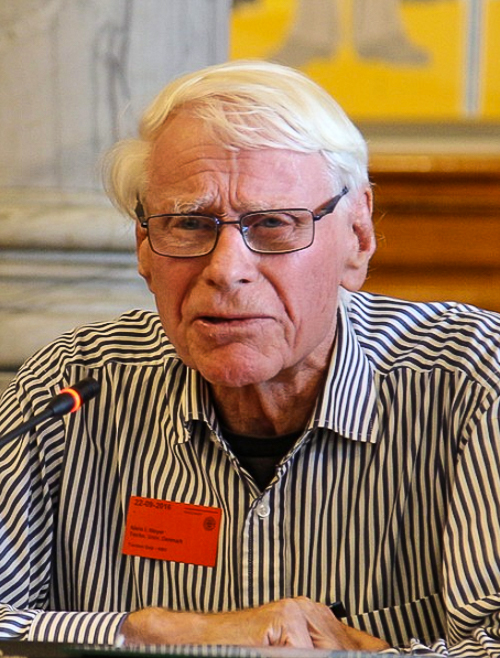
Niels I. Meyer, a pioneer in the Danish Basic Income movement and co-founder of BIEN, has passed away. A prolific writer as well as a frequent participant in public debates, Niels I. Meyer was in his professional life a professor in physics with important contributions to Denmark’s transition to sustainable energy.
Read more by clicking here.

by Peter Knight | Aug 31, 2023 | News
The FRIBIS Annual Conference 2023 from Oct. 09 – Oct. 11 will focus on Care & Gender as fundamental dimensions of human societies. It is dedicated to research, approaches and the possible interactions of care & gender in context of the Unconditional Basic Income (UBI). Although care and gender have many intersections, they have unique characteristics and specificities that necessitate separate consideration. Therefore, FRIBIS welcomes contributions which address the theme of care and gender separately or in tandem.
For more information visit the FRIBIS website.
Highlights (Keynotes & Panel Discussion)
Keynotes
Prof. Dr. Almaz Zelleke (NYU Shanghai): “Toward a Gender-Inclusive Social Policy State”
Prof. Dr. Ben Trott: “A Queer Case for the Basic Income at Our Current Conjuncture: Political Philosophy, Individual Rights and De-Individualisation“
Mag. Margit Appel: „Zusammendenken: Arbeit – Care – Grundeinkommen“
Panel Discussion
„Care-Ökologie und das Grundeinkommen: eine komplexe Beziehung“ mit Prof. Dr. Ute Fischer (Moderation) und den Gästen: Mag. Margit Appel, Prof. Dr. Georg Cremer, Dr. Christine Rudolf & Prof. Dr. Sascha Liebermann.
by Peter Knight | Aug 30, 2023 | News
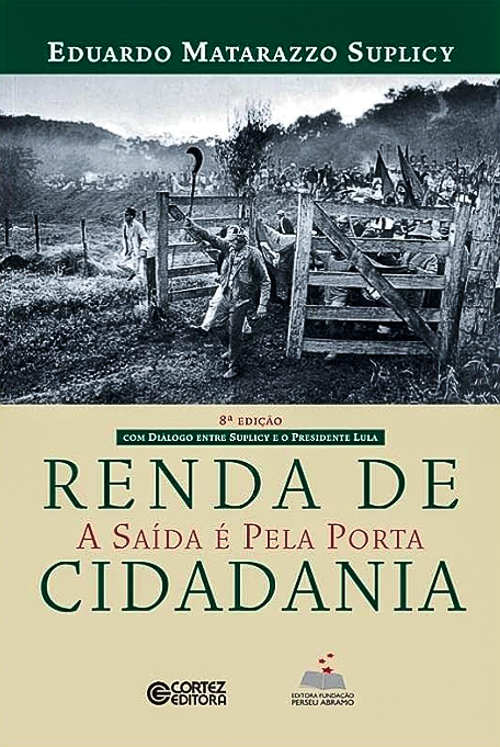
In the eighth edition of Eduardo Suplicy’s book, Citizen’s Income: The Way out is through the Door (Renda de Cidadania: A Saída É Pela Porta) there is a dialog between Suplicy and now re-elected President Luis Inácio Lula da Silva on the occasion of Suplicy’s 80th birthday in 2022. Here is an English translation of part of that dialog:
“I think that, after the pandemic, Basic Income will return with much greater strength, and that it is not possible that we will not succeed in getting the world to adopt it. If Brazil has a democratic president who cares, the BRICS may adopt it. South America may begin to do this, we can evolve beginning with the realization of our vulnerabilities when we governed this country that we didn’t succeed in establishing certain policies.”
At the 22nd BIEN Congress in Seoul that ended August 26, Suplicy announced that he is proposing to President Lula the creation of a working group to study how to gradually implement the universalization of Basic Income in Brazil.
online pharmacy
buy zocor no prescription pharmacy
by Peter Knight | Aug 30, 2023 | News
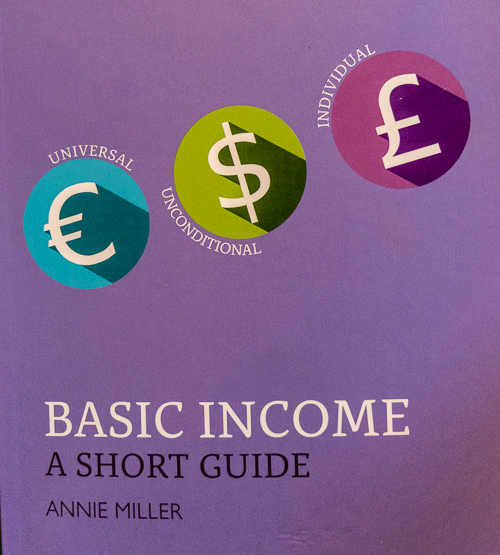
Annie Miller, a co-founder of BIEN, has just published a new book, Basic Income: A Short Guide (Edinburgh: Luath Press). This is a clear, concise, and complete work that should be in the library of every supporter of basic income (BI).
The book begins with a critique of modern social insurance systems and means-tested social assistance safety nets and then sets forth an enhanced definition of BI that builds on the current definition found on the BIEN website. This new definition is informed by Annie’s participation in the BIEN task force currently working on improving this definition and was presented by her at the 22nd BIEN Congress in Seoul that just ended. To the five BIEN characteristics (periodic, cash payment, individual, universal, and unconditional) she adds a sixth, uniform: “the amount of a basic income is the same/equal for everyone within a given jurisdiction at a given time and does not vary according to pre-existing categories or circumstances.” She then argues that this uniform basic income should be a foundational element in a broader social protection plan that also includes “adequacy top-up payments, other differential benefits, targeted and non-uniform means-tested benefits, and other cash benefits for which basic income is not a good substitute, such as a welfare fund for emergency payments for fire or flood.”
The book goes on to discuss many practical issues such as integrating a basic income into existing social assistance programs, sources of finance, affordability issues, economic benefits, political support, empirical evidence from around the world, the impact of the Covid 19 pandemic, other recent developments, and suggestions for what BI supporters can do to advance the cause. It ends with a select bibliography – all this in 80 compact pages, a true tour de force.
by Peter Knight | Aug 28, 2023 | News
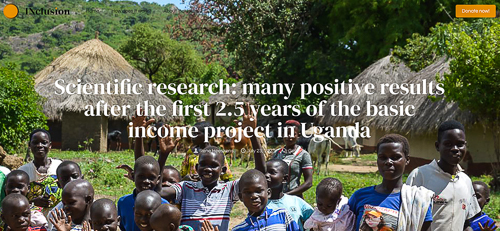
In August 2020 the Dutch NGO INclusion started a basic income pilot in the village Welle in Nebbi District in Uganda, together with Ugandan partner AFARD. All 350+ people of the village, adults as well as children, have received a basic income amounting to the equivalent of 15 euros, currently 60.000 Ugandan shilling, for the past three years. Now, the first major study by researchers of the University of Groningen of the project shows very positive results.
The midline evaluation report analyses the results 2,5 years into the project, comparing the situation during the baseline study before the start of the project, and the latest measurement in December 2022. The report is written by PhD Elisa van Dongen under the supervision of Professor Dr. Robert Lensink and Associate Professor Annika Mueller.
This basic income pilot of INclusion has some unique features. To begin with the intended duration of seven years. Most basic income experiments and projects only run for one or two years. Secondly, children receive the same basic income as adults, whereas usually children are excluded or receive less. Because of this, the amount a family receives is relatively large, amounting to 80% of the international poverty line. Thirdly, 10% of the basic income is not given to people individually but to the village as a whole. Because a generally accepted characteristic of basic income is that it is individual, these 10% do not count as basic income. But it is unconditional, and the village fund enables the community to invest in public facilities that benefit everyone.
The study took a broad look at the project results. Some of the findings:
- extreme poverty diminished from 55 to 10 percent
- food security improved considerably
- much better access to clean drinking due to a water well that was the first investment from the village fund
- the percentage of children going to primary school increased from 70 to 87 percent
- the number of days missed at school or work due to illness decreased by 75 percent
- 60 percent of the families built a new, better house
- the basic income was also used to buy and hire more land for farming
- the percentage of households owning cattle increased from 9 to 49 percent
- ownership of solar panels rose from 19 to 74 percent
Not surprisingly, the study also found that the residents of Welle experience much less stress than before and are more optimistic about their future.
Not included in the report but also an important outcome of the project is the fact that before the project started many people in Welle earned a small income by producing charcoal. This has ceased altogether. Although this might count as a negative result just looking at economic figures – a decrease in economic activity – in reality it is very positive. Not just because it was hard and ill paid work, but also because a lot of trees were cut for the charcoal production. Since the start of the project the number of trees around the village, and greenery and biodiversity in general, has improved visibly.
A more detailed discussion of the report on the website of INclusion: Scientific research: many positive results after the first 2.5 years of the basic income project in Uganda.
The full report: LIFE-Basic Income Project in Welle, Uganda – Midline Evaluation Report.

