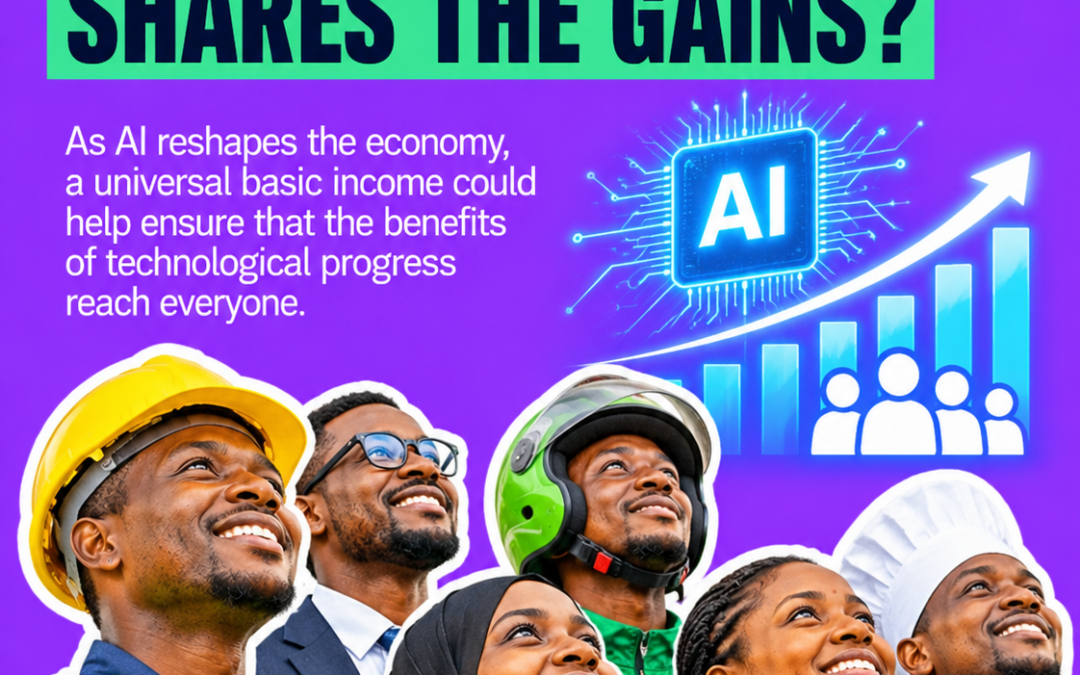
AI has put basic income back on the policy agenda. But the more useful question isn’t whether we need a response. It’s what Artificial intelligence is accelerating changes in the labour market and bringing renewed attention to Universal Basic Income (UBI). In an article published in The Meridian in November 2026, the author argues that the growing scale and speed of AI-driven job displacement are challenging traditional assumptions about employment, income security and the role of social protection.
The article highlights figures from Challenger, Gray & Christmas, which reportedly recorded 87,000 US job cuts attributed directly to AI between January and May 2026. Unlike previous waves of automation, which unfolded over decades, AI is transforming entire categories of work at a much faster pace. This raises questions about whether existing welfare systems, largely designed around the assumption of continued employment, can adequately protect workers.
The article also revisits common objections to UBI, particularly concerns about work incentives and affordability. Evidence from initiatives such as the Stockton Economic Empowerment Demonstration and Alaska’s Permanent Fund Dividend challenges the assumption that unconditional payments discourage employment. Meanwhile, the significant fiscal costs of implementing a meaningful universal income remain a major political obstacle.
One emerging proposal is an automation dividend: taxing a portion of the productivity gains generated by AI and redistributing the proceeds to help establish an income floor for workers affected by technological displacement.
Importantly, the article draws attention to the Global South, where the consequences of AI-driven job losses could be particularly severe. Countries such as Kenya, India, Nigeria and the Philippines have significant workforces in business process outsourcing, customer service and data-related industries that are increasingly exposed to automation. Unlike many developed economies, these countries often lack comprehensive social protection systems to cushion displaced workers.
The central argument is that the debate is no longer simply about whether AI will disrupt employment, but about how societies will distribute the economic gains from technological progress. As AI increases productivity while potentially reducing demand for human labour, UBI and other forms of guaranteed income deserve serious consideration as part of the response.
Read the article: https://www.themeridian.info/november-2026/3440057_universal-basic-income-is-coming-ai-forced-the-conversation