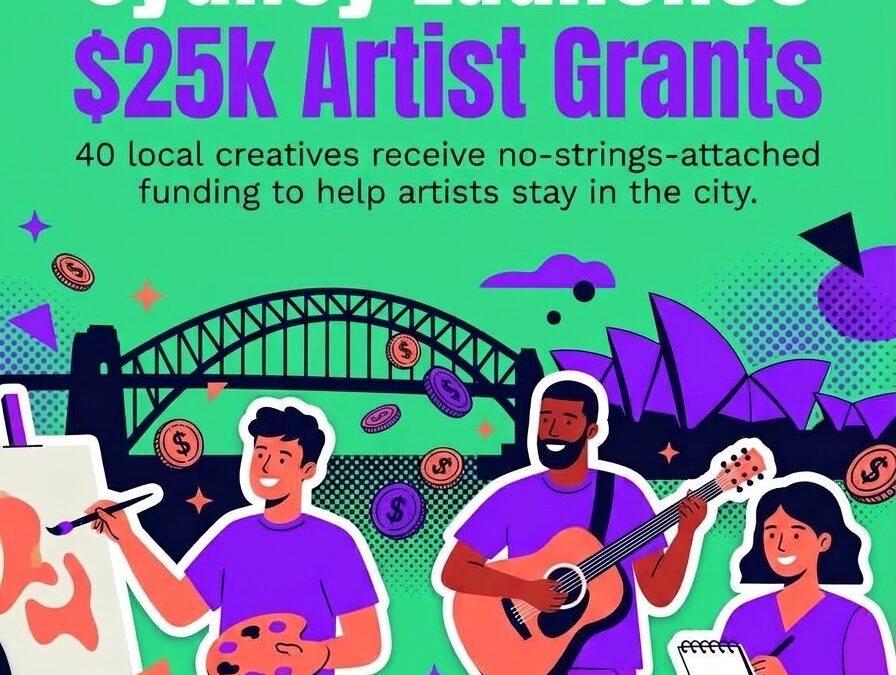
Sydney’s new $25,000 Artist Living Grant is an interesting development in how governments can support creative workers.
The City of Sydney has awarded 40 artists $25,000 each in unconditional funding. Unlike conventional arts grants, recipients are not required to deliver a particular project, produce a specific artwork or justify every expenditure against predetermined outputs.
They can use the money for living expenses, creative development, research, travel or simply to create more time for their practice.
But as the ArtsHub article rightly points out, this is not a basic income.
It is a one-off grant, awarded to a selected group of artists. It does not provide a regular, ongoing payment or establish a universal income.
That distinction matters. However, I think the initiative raises a much bigger question about how we understand and value work.
Artists often work in conditions of considerable financial insecurity. They juggle casual employment, freelance assignments, applications for grants and unpaid administrative work just to sustain their creative practice.
The result is that a significant amount of their time and energy goes into securing the next opportunity rather than doing the work they are trained and passionate about.
Traditional grant systems can reinforce this insecurity by funding specific outputs while overlooking the person behind the work.
But creativity does not always follow project timelines. Research, experimentation, learning, collaboration and reflection are essential parts of artistic practice, even when they do not produce an immediate, measurable outcome.
Sometimes the most valuable support is not funding another project. It is giving someone the financial breathing room to do their work.
Sydney’s approach recognises that artists need more than project funding. They need the freedom and stability to sustain their livelihoods.
It also draws inspiration from Ireland’s Basic Income for the Arts programme, which has demonstrated a different approach to supporting creative workers through regular income payments.
These initiatives are not identical, but they point towards an important shift: moving from funding outputs to recognising the economic security of the people who create social and cultural value.
I believe this discussion should extend beyond the creative sector.
Much of the work that holds our societies together is poorly paid, unpaid or difficult to capture through conventional employment and productivity measures.
Caregiving, community organising, cultural preservation, volunteering and environmental stewardship are all examples.
Our economies have become very good at measuring market value, but much less effective at recognising the broader contributions people make to society.
Universal Basic Income offers a different starting point: everyone should have access to a regular, unconditional income floor, not because they have completed an approved project or met a particular employment requirement, but because economic security is a foundation for human dignity and freedom.
Sydney’s grant is not UBI, and we should not confuse the two. But it is a useful example of what happens when institutions begin to trust people with flexible financial support.
Read the ArtsHub analysis: https://www.artshub.com.au/news/industry-news/its-not-a-basic-income-but-this-25000-is-no-standard-grant-either-2880500/