Imagine experiencing a better quality of life, only to watch it disappear when the income that helped make it possible is withdrawn.
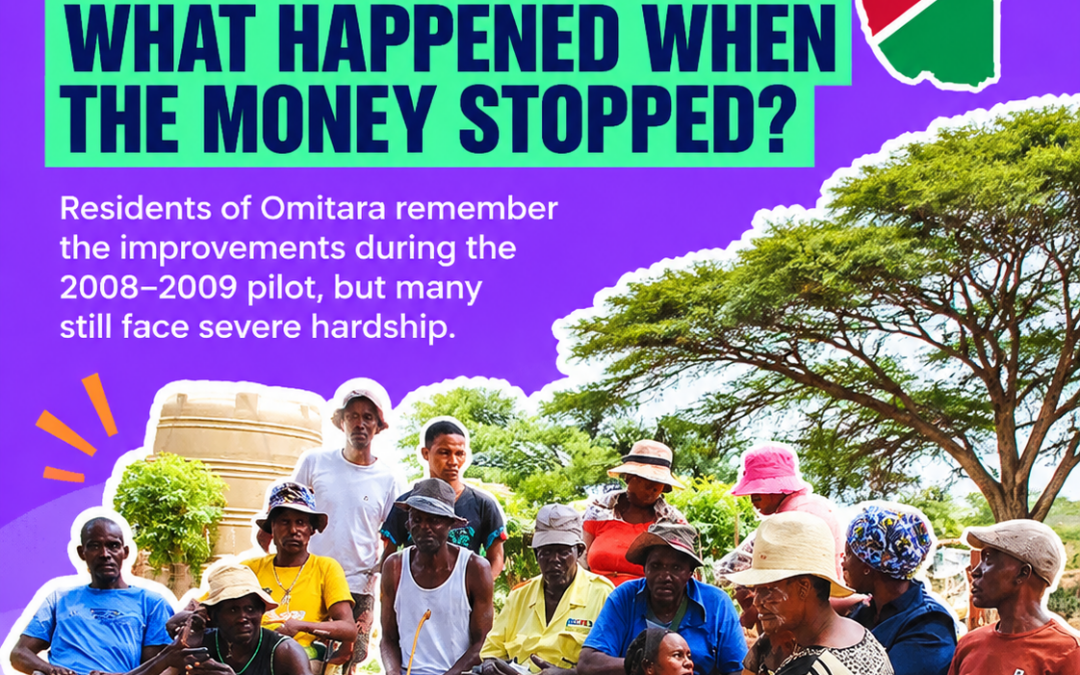
That is the reality facing many residents of Omitara, Namibia, nearly 17 years after the country’s pioneering Basic Income Grant (BIG) pilot came to an end.
In 2008, around 1,000 residents of Otjivero-Omitara began receiving N$100 per person every month, unconditionally. It was a relatively modest amount, but its impact went beyond the money itself.
Residents remember being able to afford food, send children to school with lunch, pay electricity bills and invest in small businesses. Some households were even able to purchase building materials and improve their homes.
Today, the picture is very different.
In a recent report by The Namibian, residents describe growing hunger, worsening poverty and the loss of the financial breathing space they once enjoyed. An unemployed mother of six recalls a time when her family could afford three meals a day. Now, there are days when they struggle to find even one.
Perhaps the most troubling part of this story is that the national rollout originally envisioned after the pilot never happened.
Namibia has since introduced a Conditional Basic Income Grant (CBIG), offering N$600 per month to some extremely poor households. However, Omitara residents say the programme has not reached them. Its eligibility requirements also exclude some households without municipal accounts, water bills or formal plot numbers. The programme was paused in October 2026 due to insufficient funding.
There are three important lessons here for the global basic income movement.
1. Income security is not just about the amount of money.
Even a modest, predictable payment can make a meaningful difference to household decisions. People can plan, buy food, invest in livelihoods and respond to unexpected expenses. What matters is not simply the transfer, but the security and choices it creates.
2. Cash works best when people are trusted.
The original BIG was unconditional. Residents were not required to prove their worthiness, meet behavioural conditions or follow prescribed spending priorities. They were trusted to understand their own needs and make decisions accordingly.
This is an important departure from social protection systems that often place administrative burdens and restrictions on the very people they are meant to support.
3. Pilots should be pathways to lasting policy, not temporary demonstrations.
Perhaps the greatest lesson from Omitara is the danger of ending a successful intervention without establishing a sustainable alternative.
A pilot can generate evidence, demonstrate feasibility and change public attitudes. But if the policy conversation does not translate into lasting institutions and reliable financing, communities can be left with little more than memories of what was possible.
This is particularly relevant across Africa, where millions of people remain outside formal employment and existing social protection systems.
We often discuss poverty through the language of programmes, targeting, eligibility and limited resources. But perhaps we should start with a more fundamental question: what would it take to guarantee everyone a basic level of income security?
Omitara is not simply a story about a grant that ended. It reminds us what is at stake when the right to economic security remains temporary.
The challenge now is to move beyond isolated pilots and build sustainable systems that recognise income security as a foundation for human dignity, freedom and development.
Read the full report by The Namibian: https://www.namibian.com.na/omitara-hungers-for-basic-income-grant-return/