The 2020 BIEN General Assembly has been cancelled, with the permission of the UK’s Charity Commission, because the coronavirus pandemic has caused the cancellation of the 2020 BIEN Congress. The Executive Committee has arranged for as much as possible of the business that would have been done at the General Assembly to be done by postal ballot. All members of BIEN will be sent ballot papers to their registered email address by the end of August.
Papers relating to the ballots, and to the General Assembly if it had been held:
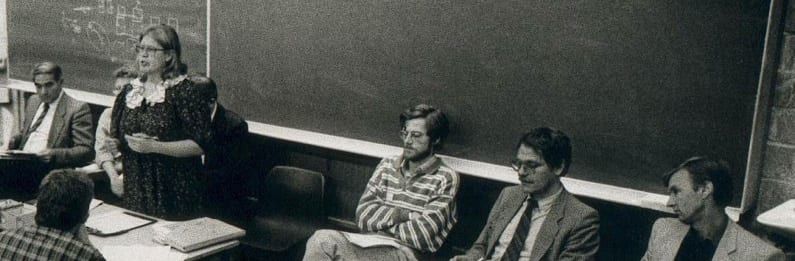
The origins: an idea, a collective, a prize. In the Autumn of 1983, Paul-Marie Boulanger, Philippe Defeyt and Philippe Van Parijs, three young researchers attached to the departments of demography, economics and philosophy of the University of Louvain (Belgium) decided to set up a working group in order to explore the implications of an extremely simple, unconventional but attractive idea which Van Parijs had proposed to call, in a paper circulated in December 1982, “allocation universelle”. The group chose as a collective pseudonym Collectif Charles Fourier. Its main output was a special issue of the Brussels monthly La Revue nouvelle (April 1985). But along the way, it won a prize, with a provocative presentation of the idea and its putative consequences, in an essay competition on the future of work organised by the Brussels-based King Baudouin Foundation.
The first meeting.With the money it thus unexpectedly earned, the Collectif Charles Fourier decided to organise a meeting to which they would invite a number of people to whom the idea of an Unconditional Basic Income had, they gradually discovered, independently occurred. This meeting became the first international conference on Basic Income, convened by Philippe Van Parijs in the university town of Louvain-la-Neuve on 4-6 September 1986, with sixty participants individually invited. It turned out to be quite an extraordinary event, with many seemingly lonely fighters suddenly discovering a whole bunch of kin spirits. They included, among others, Gunnar Adler-Karlsson, Jan-Otto Andersson, Yoland Bresson, Paul de Beer, Alexander de Roo, Rosheen Callender, Nic Douben, Marie-Louise Duboin, Gérard Roland, Ian Gough, Pierre Jonckheere, Bill Jordan, Greetje Lubbi, Annie Miller, Edwin Morley-Fletcher, Claus Offe, Hermione Parker, Riccardo Petrella, David Purdy, Guy Standing, Robert van der Veen, Georg Vobruba and Tony Walter.
A network is born. At the final session of the conference, several participants expressed the wish that some more permanent association be created, with the task of publishing a regular newsletter and organising regular conferences. Guy Standing proposed calling this association Basic Income European Network, which gathered an easy consensus, since no one could beat the beauty of the corresponding acronym (BIEN, which means “good” in French and Spanish). Its purpose, later enshrined in its Statutes adopted in 1988, was formulated as follows: “BIEN aims to serve as a link between individuals and groups interested in Basic Income, i.e. an income unconditionally granted to all on an individual basis, without means test or work requirement, and to foster informed discussion on this topic throughout Europe”. Peter Ashby (National Council for Voluntaty organisations), Claus Offe (then at the University of Bremen) and Guy Standing (then at the International Labour Organisation) became BIEN’s first chairpersons. Walter Van Trier (then at the University of Antwerp) became secretary, Alexander de Roo (then parliamentary assistant at the European Parliament) treasurer, and Philippe Van Parijs (University of Louvain) newsletter editor, subsequently combined with secretary. Ashby and Offe left as co-chairs in 1988 and were succeeded by Edwin Morley-Fletcher (1988-1998) and Ilona Ostner (1996-2004), jointly with Guy Standing (1986-2008).
Lifeline of the network: the newsletter. In the pre-internet era, the regular dispatching of a printed newsletter formed the very core of the existence of a network. From 1988 to July 2001, BIEN published a printed Newsletter that was sent to fee-paying members three times per year (36 issues). In order to facilitate the management of the subscriptions, the annual membership was replaced by a life membership formula in the Autumn of 1998, The emergence of electronic communication made it possible to intensify and widen the spreading of information. From January 2000 onwards, BIEN News flashes were sent several times per year to a large number of subscribers far beyond BIEN’s membership (138 issues between January 2000 and January 2020, when BIEN adopted a new style of Bulletin). In 1996, BIEN also inaugurated a website. Initially, it did little more than making newsletters and newsflashes available for downloading. It later grew rapidly to provide a wealth of information and resources on Basic Income and the Basic Income movement.
Congresses of growing scope. Starting with the founding conference, BIEN organized a congress every second year, with a growing and increasingly diverse set of participants:
Louvain-la-Neuve, BE (UCLouvain, 4-6 September 1986, convenor: Philippe Van Parijs)
Antwerp, BE (Universitaire Faculteiten St Ignatius, 22-24 September 1988, convenor: Walter Van Trier)
Florence, IT (European University Institute, 19-20 September 1990, convenor: Edwin Morley-Fletcher)
Paris, FR (Université de Paris-Val de Marne, 18-19 September 1992, convenors: Yoland Bresson & & Pierre Lavagne)
London, UK (Goldsmith College, 8-10 September 1994, convenor: Richard Clements)
Vienna, AT (United Nations Centre, 12-14 September 1996, convenors: Lieselotte Wohlgenannt, Michael Tepser & Bernd Marin)
Amsterdam, NL (Universiteit van Amsterdam, 10-12 September 1998, convenors: Robert J. van der Veen, Loek Groot & Paul de Beer)
Berlin, DE (Wissenschaftszentrum Berlin), 6-7 October 2000, convenor: Claus Offe)
Geneva, CH (International Labour Office, 13-14 September 2002, convenor: Guy Standing)
Barcelona, ES (Forum Universal de las Culturas, 19-20 September 2004, convenors: David Casassas & Jose Noguera)
Archive from the early days. Contributions to some of the congresses were published in a number of collective volumes:
Anne G. Miller ed. Proceedings of the First International Conference on Basic Income (Louvain-la-Neuve, September 1986). Antwerp: BIEN & London: BIRG, 1988.
Walter Van Trier ed. Proceedings of the Second International Conference on Basic Income. (Antwerp, September 1988). Antwerp: BIEN & London: BIRG, 1990
Philippe Van Parijs ed., Arguing For Basic Income. Ethical Foundations for a Radical Reform. London & New York: Verso, 1992.
Robert J. van der Veen & Loek Groot eds., Basic Income on the Agenda. Policy Options and Political Feasibility, Amsterdam: Amsterdam University Press, 2000.
Guy Standing, ed., Promoting Income Security as a Right. Europe and North America, London: Anthem Press, 2004.
Along with a great many other books, papers and reports on Basic Income from before the internet era, the papers presented at BIEN’s first few congresses are kept in BIEN’s Archive at UCLouvain’s Hoover Chair of Economic and Social Ethics, 3 Place Montesquieu, 1348 Louvain-la-Neuve, Belgium.
From a European to a worldwide network. By 2004, 20% of the online subscribers and 25% of BIEN’s life members were from outside Europe. Pressure therefore increased to turn BIEN from a European into a worldwide network. The development of internet communication and of low-cost air travel made this option more realistic. And in January 2004, President Lula signed into law Senator Eduardo Suplicy’s proposal for a “basic citizenship income” for all Brazilians. This finished convincing the sceptics who thought that an Unconditional basic income could only make sense in European countries with a developed welfare state. At the September 2004 congress in Barcelona, BIEN’s executive committee proposed to change the name of the network from “Basic Income European Network” to “Basic Income Earth Network”. This proposal was adopted by BIEN’s General Assembly on 20 September 2004.
Structuring the movement. The newly elected committee undertook to modify and expand the statutes (until then no more than a single page), a new version of which was approved by the General Assembly in 2008. Owing to the growth of the network, the size of the executive committee had to increase, with the managing of the website gaining in importance. The committee of the expanded network was successively co-chaired or chaired by Guy Standing and Eduardo Suplicy (2004-2008), Ingrid van Niekerk (2008-2014), Karl Widerquist (2008-2017), Louise Haagh (2014-2020) and Sarath Davala (2020-). An Advisory Board that includes all past committee members is chaired by Philippe Van Parijs (2004-). In May 2016, the position of general manager was created, the incumbent of which is not elected by the General Assembly but appointed by the Executive Committee. Malcolm Torry has held this position since its creation. In 2016, the network was officialized as an international non-profit organization (AISBL) under Belgian law and two years later turned into a charitable incorporated organization (CIO) under British law, with its official seat moved from Brussels to London, and the statutes amended accordingly.
From biennial to annual congresses. As a result of becoming a worldwide network, BIEN started recognizing national networks outside Europe as affiliates and decided in 2004 to start alternating non-European and European locations for the congress. In 2016, given the increasing popularity of the idea of basic income across the world, it decided to start organizing a congress every year instead of every second year. The Basic Income Earth Network met in the following places:
Capetown, ZA (University of Capetown, 3-4 November 2006, convenor: Ingrid van Niekerk)
Dublin, IE (University College, Dublin, 21-22 June 2008, convenors: Sean Healy & Brigid Reynold)
Sao Paulo, BR (Universidade de São Paulo, 30 June-2 July 2010, convenors: Eduardo Suplicy & Fabio Waltenberg)
Ottobrunn, DE (Wolf-Ferrari Haus, 14-16 September 2012, convenor: Dorothee Schulte-Basta)
Montreal, CA (MacGill University, 27-29 June 2014, convenors: Jurgen De Wispelaere & Daniel Weinstock)
Seoul, KR (Sogang University, 7-9 July 2016, convenor: Hyosang Ahn)
Lisbon, PT (Lisbon School of Economics, 26-27 September 2017, convenor: Roberto Merrill)
Tampere, FI (University of Tampere, 24-26 July 2018, convenor: Jurgen De Wispelaere)
Hyderabad, IN (NALSAR University, 23-26 August 2019, convenor: Sarath Davala)
[20. Brisbane, AU (University of Queensland, 28-30 September 2020, convenors: Troy Henderson & Greg Marston): postponed to 2022 because of the covid19 pandemic]
21. Glasgow, UK (Online, 18-21 August 2021, convenor: Mike Danson)
Providing enthusiasm, imagination, mutual understanding and tenacity keep feeding the worldwide basic income movement, this is only the beginning of BIEN’s history.
On this page you will find information about BIEN’s congresses, and also notices about other events
Congresses
The 2020 BIEN Congress was to be held in Brisbane in Australia from the 28th to the 30th September 2020. Unfortunately, because of the coronavirus outbreak, the event has had to be cancelled. BIEN’s Executive Committee and the Scottish and Australian congress Local Organising Committees have agreed the following statement: ‘The Scottish and Australian Congress Local Organisation Committees have agreed that the current plan is to hold the 2021 BIEN congress in Scotland and the 2022 BIEN congress in Australia. Further details will follow.’
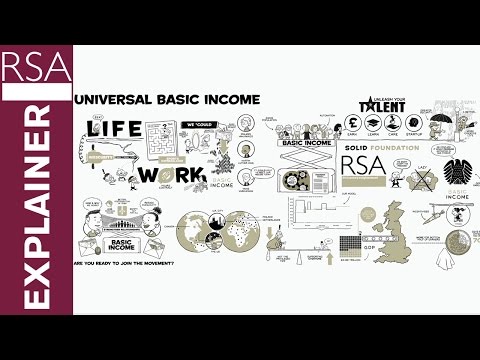
A Basic Income is a periodic cash payment unconditionally delivered to all on an individual basis, without means test or work requirement.
Sometimes called Universal Basic Income, a Citizen’s Income, or a Citizen’s Basic Income, it is not the same as a Minimum Income Guarantee; A Basic Income does not reduce as one earns more. For more information: About Basic Income
Why do we need it?
Because someone’s Basic Income would never be taken away, it would
provide a secure financial platform to build on
enable the employment market to become more flexible at the same time as enhancing income security
give to everyone more choices over the number of hours for which they were employed
enable carers to balance their caring and other responsibilities
make it easier to start new businesses or to go self-employed, and
encourage personal freedom, creativity, and voluntary activity
Because everyone would get a Basic Income, it would
create social cohesion, and
carry no stigma
Because the Basic Income would never be withdrawn, it would
reduce the poverty trap for low income families, enabling them to lift themselves out of poverty by seeking new skills, better jobs, or additional hours of employment
reduce the unemployment trap, so getting a job would always mean additional disposable income
Because Basic Income would be simple and efficient, it would
be easy to understand
be cheap to administer and easy to automate
not be prone to errors or fraud
Many current benefits system are no longer fit for purpose. They assume that everyone has a stable single employment, that household structures don’t change, and that individuals’ circumstances change very rarely. Our lives are no longer like that: and as technology and the employment market continue to change, our benefits systems will become even less appropriate.
In a context of rapid change, the only useful system is a simple one. A Basic Income is as simple as it gets.
Why pay money to the rich when they don’t need it?
It is efficient to pay the same level of income to everybody of the same age and then tax it back from those who don’t need it. The alternative is to means-test incomes so that only those who are poor receive them: but that results in complexity, stigma, errors, fraud, and intrusive bureaucratic interference in people’s lives.
Would Basic Income be financially feasible?
Tests for a Citizen’s Basic Income scheme’s financial feasibility might be listed as follows:
Revenue neutrality ( – that is, it would be funded by making changes to the current tax and benefits system), or sustainable additional funding should be shown to be feasible
Poverty and inequality need to fall
Low income households should suffer no significant losses at the point of implementation, and no household should suffer unmanageable losses
Income Tax rates should rise by a clearly manageable amount
A significant number of households should be released from means-tested benefits
Would people still work?
If by ‘work’ we mean ‘paid employment’, then the answer is yes. In the short to medium term, we are unlikely to see a Basic Income that would be sufficient to live on, so everyone would need additional sources of income. And because Basic Incomes would not be withdrawn as earnings rose, any family taken off means-tested benefits by their Basic Incomes would experience a reduction in withdrawal rates, and would experience more incentive to seek employment, or to start their own business, than they do now.
If by ‘work’ we mean purposeful activity of any kind, then the answer is again yes. By providing a secure layer of income, a Basic Income would enable people to readjust their employment hours in order to undertake additional caring and community work.
Why pay money to people who do nothing?
In many countries we are already paying means-tested benefits to people who do nothing, and the complexity and sanctions associated with those payments demotivate people and can tip their families into poverty. A Basic Income would take a lot of people off means-tested benefits, and so would encourage economic activity. Pilot projects in India and Namibia showed that in countries with less developed economies, and without comprehensive benefit systems, even quite small Basic Incomes increase economic activity among households with the lowest disposable incomes.
Would immigration go up?
As with other benefits, a government would be likely to require a period of legal residence before someone could receive a Basic Income. Because Basic Income would provide everyone with a secure layer of income, and therefore a greater employment incentive than means-tested benefits, anyone coming into the country would be even more likely to contribute to the economy than they are now.
Would wages fall?
Means-tested benefits function as dynamic subsidies – that is, they rise if wages fall, which can encourage wage-cutting. A Basic Income would not rise if wages fell, so employers would experience more resistance if they attempted to cut wages.
Some wages might rise. Because everyone would have a secure financial platform on which to build an income strategy, some workers would be more able to leave undesirable jobs in order to start their own businesses, or to learn new skills and seek new jobs; and workers would be able to spend longer looking for a job that they might want, rather than just any job. Either currently undesirable jobs would have to improve, or wages would have to rise in order to attract workers.
Some wages might fall. Because everyone would have a secure income layer, some people might decide to take a desirable job even if it didn’t pay very much. Wage levels for desirable jobs might therefore fall.
Would a Basic Income threaten the welfare state?
If a revenue neutral Citizen’s Basic Income scheme were to be implemented, then no cuts to public services would be required. The amounts of means-tested benefits received by households would fall, but only because those households were already receiving Basic Incomes. Benefits specifically designed to cover the additional costs of disability, and benefits to cover the differing housing costs in different areas, would continue.
Would a Basic Income cause inflation?
Inflation occurs when the amount of money available to spend is greater than the value of the economy’s productive capacity. In that situation, if the amount of money keeps growing, then each unit of money can buy progressively less, so money loses its value, sometimes rapidly. A Basic Income scheme paid for purely by making changes to the current tax and benefits system would not add to the money supply, so inflation would not occur. If the amount of money available to spend was below the productive capacity of the economy, then a government could create money until the gap was filled, and that new money could be used to pay a Basic Income: but if inflation started to occur, then money creation would have to stop, and new taxes would have to be used to pay for the Basic Income.
Has a Basic Income ever been tried?
Short pilot projects have taken place in Namibia and India, and something like a Basic Income has been implemented by accident in Iran. Experiments with the similar but different Minimum Income Guarantee and Negative Income Tax in the United States and Canada during the 1970s showed useful social outcomes and very little withdrawal from employment. The similarities between the economic effects of a Minimum Income Guarantee and Basic Income would suggest that the results of the Minimum Income Guarantee experiments would be replicated if a Basic Income were to be implemented; and the differences between them mean that the effects are likely to larger for Basic Income than for the 1970s experiments. Basic Income pilot projects and similar experiments continue in the United States, Uganda, Kenya, Spain, and the Netherlands, and experiments are planned for Scotland.